What is guerrilla marketing — and why do I still bet on it?
Guerrilla marketing means winning attention with an idea instead of a media budget. You don’t pay people to look at you; you give them a reason to talk about you.
It’s been an obsession of mine for years. I even wrote my master’s thesis on it. Not every brand needs something wild — but the best campaigns I’ve seen share one trait: people who have nothing to do with the brand choose to pass them on.
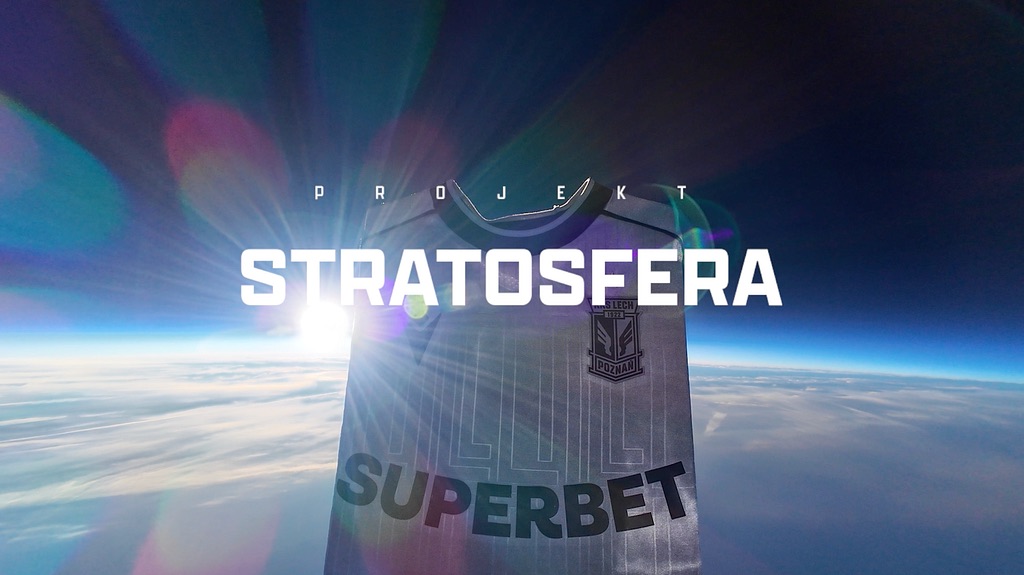
The idea: a match jersey, 35 kilometres above the Earth
With Lech Poznań we asked a simple question: what if one of the club’s match jerseys left the planet’s weather behind? The answer was a capsule, a high-altitude balloon and roughly 35 kilometres of sky — far above where commercial aircraft fly.
Simple to say. Not simple to do. It took several months of preparation and a specialist science organisation for the technical side. The jersey travelled in a purpose-built capsule with three cameras and a GPS tracker.
How did the launch and recovery work?
- We prepared the capsule: jersey inside, three cameras filming, GPS tracker attached.
- The balloon carried it to around 35 kilometres.
- We waited. Nobody could promise it would reach the stratosphere, or where it would land.
- When the capsule started falling, we followed its GPS signal by car.
- We found it at night. The jersey was intact — and every step was on camera.
Until the very end we had no idea whether it would come down on a motorway, in a lake or in the top of a tree.
Why did we keep the ending secret?
We didn’t announce the result. Fans asked in the comments: did it really reach the stratosphere? Where did it land? Did you find it? We deliberately left those questions hanging.
The answers arrived later, in one film that showed everything from launch to recovery. That’s the part I find most interesting as a marketer: we weren’t publishing a stunt, we were publishing a story with an open ending, and people stayed to find out how it finished.
What did the campaign deliver?
The story was picked up by local media, sports media and marketing publications. For each of them it became content for their own audience, not a press release to be rewritten.
Buying the same spread of coverage would mean sponsored articles, banners and paid social across several types of outlet — expensive, and every placement would be labelled as advertising. Here the headline wrote itself: “Lech Poznań sent a football jersey to the stratosphere.” Nobody had to be told why the club is great.
To be clear, this wasn’t free. It took planning, production, equipment, logistics and a lot of people. The difference is where the money went: into creating something that generates its own media value, instead of renting distribution.
Three rules I take from it
- Make the action the story. If the headline needs a paragraph of explanation, the idea isn’t sharp enough.
- Build for people outside your marketing department. The real test is a journalist thinking “this is worth writing about.”
- Make it live beyond your own channels. If the campaign only exists on your Instagram, you carry all the distribution. If it’s strong enough, journalists, creators and communities carry it for you.
You don’t convince people that your campaign is interesting. You make something genuinely interesting and let it do the work.
Quick answers
What is guerrilla marketing?
Guerrilla marketing is an idea-led way to win attention — an unusual action, stunt or story that people choose to share — rather than buying reach through ads.
How high did the Lech Poznań jersey go?
Around 35 kilometres above the ground, in a capsule carried by a high-altitude balloon. Lech Poznań was the first Polish football club to send a jersey into the stratosphere.
Was the stratosphere stunt expensive?
It wasn’t free: it needed months of preparation, technical equipment, logistics and a large team. The point is that the budget went into creating a story that earned its own coverage rather than into buying media placements.