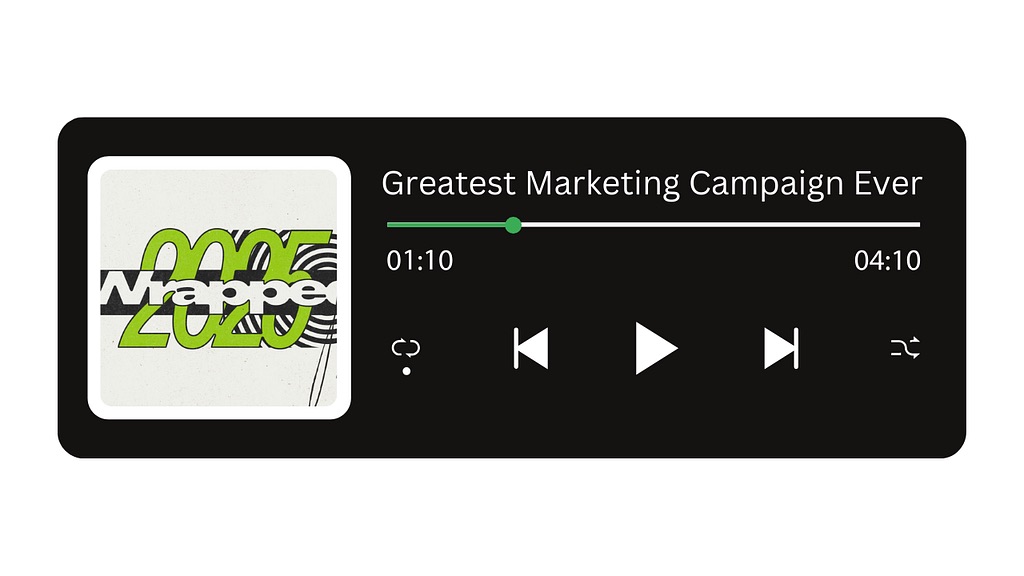
What is Spotify Wrapped?
Every December, millions of people open Spotify and see bold colours, quirky stats and personalised insights about their year in music. Then they share it — on Instagram Stories, TikTok, WhatsApp groups and X. For a few days, people stop talking about music and start talking about Spotify.
That isn’t luck. It’s a masterclass in turning customer data into marketing.
How did Wrapped start?
It began modestly. In 2015 Spotify ran a simple idea called Year in Music: show people stats about what they’d played. In 2016 it became Spotify Wrapped and grew year by year.
Early on nobody expected the avalanche. It wasn’t a top priority, and it took internal advocacy to push it forward. The first versions were plain — data, no social-first design. The turning point came by 2019, when Wrapped was built into the app as sleek, story-style slides designed to be shared. That’s when it went viral.
How much earned media does it generate?
Every year Wrapped turns users into unpaid brand ambassadors. Millions post screenshots and videos, and #SpotifyWrapped has gathered hundreds of billions of views across TikTok and Instagram. In 2025, Wrapped reportedly drove over 500 million shares and engagements within 24 hours of launch.
All of that costs Spotify little in paid media. It works as one huge user-generated ad campaign, and it’s far more convincing than “buy this music service” because the content is each person’s own.
Did competitors copy it?
Yes. Apple Music Replay, YouTube Recap, and annual summaries from Duolingo and Strava all follow the same recipe: personal data, emotional storytelling, built to be shared. Yet Spotify’s version still owns the moment, because millions wait for it. It isn’t a gimmick any more; it’s a seasonal event.
Tradition is the ultimate marketing goal
Many brands hope for a hit ad. Spotify built a tradition — a higher goal. Traditions shape calendars and expectations: the Macy’s Thanksgiving Parade became part of family rituals, Coca-Cola’s Santa signals the start of the holidays, and in China Singles’ Day (11.11) is now one of the biggest shopping events in the world.
Wrapped did the same for an end-of-year data dump. People don’t just expect it; they celebrate it.
What can any brand copy from Spotify Wrapped?
- Turn customer data into a story about the customer, not about you.
- Design for sharing from day one: vertical, visual, quick to read, flattering.
- Start simple and iterate. Wrapped began as plain stats and improved for years.
- Repeat it on a schedule. The same moment every year is what turns a campaign into a ritual.
The lesson: don’t just market your product — create an experience that becomes a tradition.
Quick answers
When did Spotify Wrapped start?
In 2015 as “Year in Music”; it was rebranded as Spotify Wrapped in 2016 and became a shareable, in-app story format by 2019.
What is the “ego economy” in marketing?
It’s the idea that people love content that reflects their own identity and tastes back to them — which is why personalised recaps get shared far more than generic ads.
What can a small brand learn from Spotify Wrapped?
You don’t need Spotify’s data. Any business can send customers a personal recap — a year of orders, workouts, savings or progress — designed to be shared.